
Pencil Control for Kids: 7 Easy Activities to Prepare Little Hands for Writing
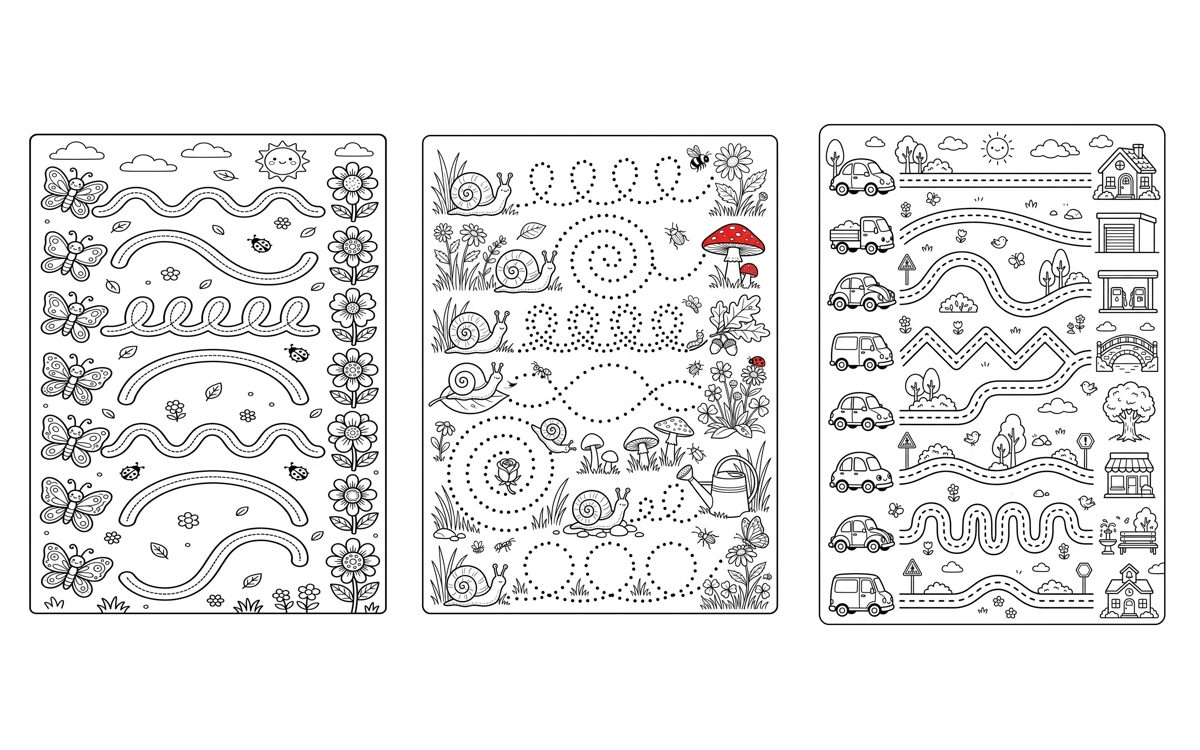
Long before a child writes a first letter, their hands are learning how to hold, steer and control a pencil. That skill is often called pencil control, and it grows through lots of playful practice rather than drills. This guide explains what pencil control is and shares seven easy activities you can try at home or in the classroom.
What is pencil control?
Pencil control is the ability to move a pencil or crayon where you want it to go: following a line, turning a corner, stopping at a boundary and varying how hard you press. It combines hand strength, finger coordination and hand-eye coordination. Those strokes (straight lines, curves, loops, zigzags and circles) are the building blocks of letters and numbers.
A quick note on grip
Most children start with a whole-fist grip and gradually move toward holding the pencil with the thumb and first two fingers. This takes time, and it happens at different speeds for different kids. Short, chunky crayons and small pencil stubs can make it easier for little fingers to find a comfortable hold. Aim for a relaxed hand rather than a tight squeeze, and a smooth line rather than a perfect one.
7 activities to build pencil control
1. Trace wavy lines, zigzags and spirals
Following a path from one side of the page to the other is the classic pencil control exercise, and it works because it practices exactly the movements writing needs. Our Pencil Control activity pages turn it into a game: rain drops falling, snails winding through a garden, race cars on twisty roads.
2. Trace dotted pictures, then color them
Connecting dots into a finished outline gives kids a clear goal and a quick reward. Try our Trace & Color pages: first trace the dotted parts of a lion, a dragon or a unicorn, then color the whole picture.
3. Finish the other half of a drawing
Copying a shape across a center line asks kids to look carefully, plan a stroke and match curves and corners. Our Complete the Drawing pages show half of a picture, and the child draws the missing half. Start with simple shapes like balls and umbrellas before trying detailed animals.
4. Color inside the lines
Coloring is gentle pencil control practice in disguise. Pick pages with big, clear areas for beginners, then move to smaller areas as confidence grows. Browse our coloring pages for subjects your child loves.
5. Warm up the fingers away from paper
Strong, flexible fingers make pencil work easier. Squeezing and rolling playdough, picking up small objects with tongs or tweezers, tearing paper into pieces, using clothespins and threading large beads are all good finger workouts that feel like play.
6. Draw big before drawing small
Shoulder and arm control come first. Let children draw giant shapes with chalk on the pavement, paint with water on a fence, or use markers on a large sheet of paper taped to a wall or table. Drawing on a vertical surface also encourages a helpful wrist position.
7. Follow paths and roads
Draw a simple road, river or maze on paper and let a child steer a pencil "car" along it without touching the sides. Make the path wider for beginners and narrower for experienced kids. It is a small challenge that builds careful control.
Keep it short and fun: five to ten minutes at a time is plenty for young children. Stop while they are still enjoying it, and praise effort and creativity rather than neatness.
When to ask for help
Children learn these skills at different speeds, and a wide range is completely normal. If your child seems consistently frustrated, avoids drawing or writing, or you have other concerns about their hand skills, talk with their teacher or pediatrician. They can suggest next steps, such as an occupational therapy evaluation if appropriate.
Try it with these printable pages
- Pencil Control activity pages: 14 sheets of wavy lines, zigzags and spirals
- Trace & Color activity pages: 10 dotted pictures to finish and color
- Complete the Drawing activity pages: 10 half-drawn sheets to complete
- All activity pages